


Which exoplanet in the TRAPPIST-1 system might be capable of supporting life? Researchers are creating a model of the star to discover
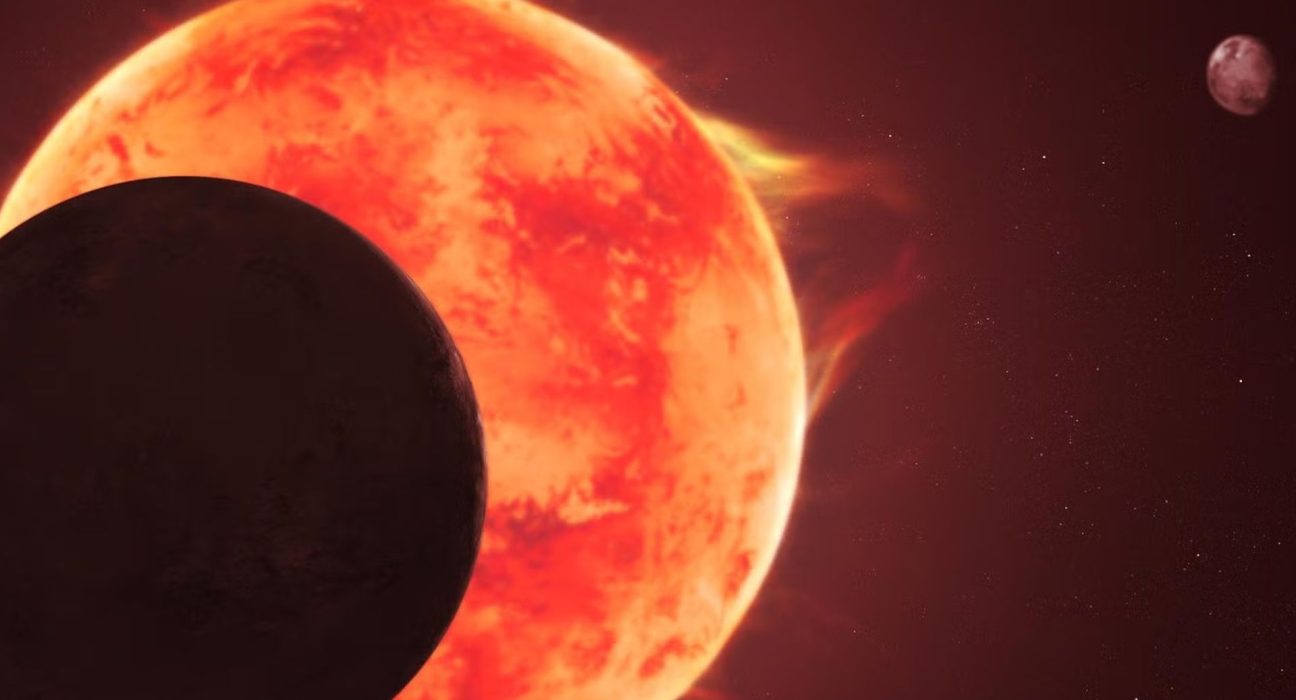
Which exoplanet in the TRAPPIST-1 system could be habitable? Scientists are modeling the star to find out (Image Credit: Space.com)
Frequent flares from the nearby star TRAPPIST-1 could offer new clues in the search for habitable planets beyond Earth.
TRAPPIST-1 is an ultracool red dwarf, located about 40 light-years away in the constellation Aquarius. It hosts seven Earth-size planets, three of which orbit in the so-called “habitable zone” where liquid water might exist. However, the small star is notoriously active, erupting with energy bursts roughly six times per day, which can threaten planetary atmospheres within the system and obstruct observations, according to a statement from the University of Colorado Boulder.
“If we can simulate these events using a computer model, we can reverse engineer how a flare might influence the radiation environment around each of these planets,” Ward Howard, lead author of the study, said in the statement. This, in turn, can help determine which worlds might retain atmospheres capable of supporting life.
Surprisingly, the electron beams powering these flares appear about ten times weaker than those seen in similar stars. That doesn’t mean they’re harmless — each flare emits radiation across the spectrum, from visible light to ultraviolet radiation and powerful X-rays, all of which can erode or alter planetary atmospheres over time.
As a result, the researchers suggested that the innermost TRAPPIST-1 planets may have lost their atmospheres, potentially leaving them as bare rocks, while one planet in the habitable zone, TRAPPIST-1e, could still retain a thin, Earth-like atmosphere — a tentative sign that it might support conditions favorable to life.
By decoding TRAPPIST-1’s flare behavior, scientists can refine predictions about which planetary atmospheres might survive its constant outbursts. Rather than mere observational nuisances or purely destructive forces, these eruptions can be read as messages from the star, offering key insights into the potential habitability of its planets and informing the broader search for life beyond Earth.
Their findings were published Nov. 20 in the Astrophysical Journal Letters.